Software Engineering Bootcamp
Deep dive into our career ready program specifics. Learn about the curriculum, hands-on projects, and the career outcomes you can expect from our industry-leading training paths.

The Full Stack Software Engineering Track
Employers particularly in fintech, banking, and SaaS are moving away from hiring "pure" frontend or backend juniors. They expect a "T-shaped" developer who is highly proficient in a modern stack (like React + Node.js or React + .NET), understands how to write automated tests, and knows how to push their code through a CI/CD pipeline into the cloud.
This structure follows exactly that trajectory, giving you professional engineering standards, frontend and backend mastery, cloud-native deployments, and collaboration as a key workplace skill.
What You'll Learn
- Advanced Git & Clean Code (SOLID)
- Modern Frontend with React & TypeScript
- REST APIs & Backend Engineering
- Application Security (OWASP) & JWT
- Database Engineering (SQL/NoSQL)
- Test-Driven Development & Automation
- Docker, Cloud Platforms & CI/CD
- System Design & Code Reviews
Bootcamp Curriculum
Module 1: Professional Engineering Standards
1 WeekModule 2: Modern Frontend Development
1 WeekModule 3: Frontend Frameworks (e.g., React)
1 WeekModule 4: Backend Engineering & API Design
1 WeekModule 5: Database Engineering & ORMs
1 WeekModule 6: Application Security & Auth
1 WeekModule 7: Software Testing & QA
1 WeekModule 8: Cloud-Native Development
1 WeekModule 9: CI/CD & Deployment
1 WeekModule 10: System Design & Scalability
1 WeekModule 11: Agile Development & Collaboration
1 WeekModule 12: Production Simulation
1 WeekProfessional Engineering Trajectory
More than just writing code: learning how to ship reliable software.
Starts with Standards: Most juniors fail tech tests not because they can't solve the problem, but because their code is messy and lacks version control. Teaching Clean Code and advanced Git immediately sets a professional baseline before diving into advanced full stack development.

What You Need to Start
A foundational grasp of basic programming concepts.
While we teach advanced frameworks and architecture, you should have existing familiarity with basic coding (variables, loops, basic functions). This allows us to accelerate directly into advanced, professional-grade engineering standards.
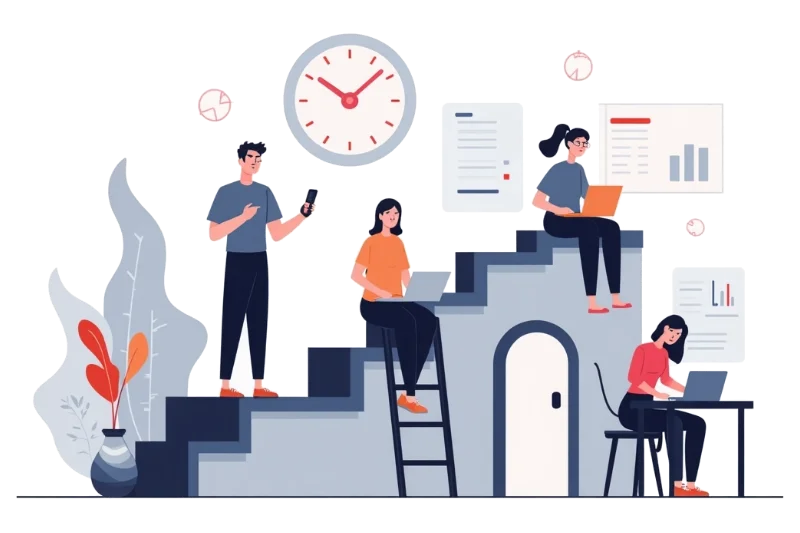
Production Simulation
Build a portfolio centerpiece working in a simulated sprint environment.
The program culminates in Week 12: Building, testing, documenting, and deploying a secure, full stack application within a simulated 2-week Agile Sprint. You will handle tickets, submit pull requests, and deploy a fully cloud-native application to showcase to employers.

Highly Employable Graduates
A "Shift-Left" approach to quality and operations.
By teaching Docker, CI/CD pipelines, and security (OWASP) early, software engineers learn where their code lives and how to defend it without relying entirely on QA or DevOps teams. The ability to leave constructive feedback on Pull Requests transforms a graduate into a highly mature, reliable team member ready for mid-level responsibilities.

Get Certified
Validate your expertise with the BridgeStack Industry Certification.
Upon successful completion of all modules and the capstone project, you will receive a verified certification. More than a certificate, this represents your ability to deliver results in high-pressure industry environments.